Pranjal Shah
07-Aug-2025

In this age of hustle, speed and movement, rediscover focus, balance, and depth by learning Indian Classical Music.
Indian classical music is known for its meditative tones and rich cultural milieu. Tracing its roots to the Vedic Period with mentions in the Samaveda, Indian Classical Music, such as the taals and the ragas, has long been used in ancient India for the wellbeing of the body and mind. Indian classical music has evolved into two distinct traditions — Hindustani in the North and Carnatic in the South.
Regardless of the stream, the benefits of Indian classical music go far beyond entertainment. It’s an experience that engages your mind, body, and spirit — and realigns them. And if yoga, meditation, or intense workouts aren't quite your thing, simply listening to Indian classical music can be a deeply healing alternative.
Here’s a closer look at the powerful benefits of Indian classical music. Consider this your cue to tune in.
What Are the Cognitive Benefits of Indian Classical Music?
We are constantly struggling with scattered thoughts and confusion, but a week of listening to classical music is known to show significant results. Replete with rhythmic taals and complex ragas, learning Indian classical music strengthens memory and sharpens concentration. The rhythms are mathematical in nature and practising them means building analytical and problem-solving skills. The constant attention required to stay in tune, in time, and in mood hones presence of mind, while the space within improvisation opens room for creativity and imagination.
Singing or playing compositions also refines your linguistic ability and deepens an appreciation for tone, pronunciation, and poetic meaning.
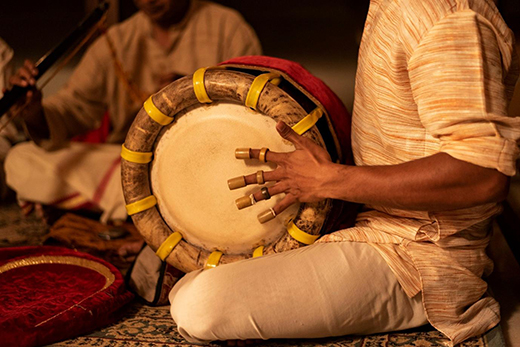
Picture Credits: Unsplash
What are the emotional benefits?
There’s something deeply therapeutic about sitting with a raga that mirrors your emotional state. Angry? There's a raga for that. Melancholic? There’s one for that too. Rain outside your window? Pick a monsoon raga and watch how it stirs something inside.
Immersing oneself in a raga, with its mood, pace, and emotional depth, can feel almost therapeutic, offering moments of catharsis and emotional release. Over time, expressing nuanced emotions in this manner deepens emotional intelligence, making one more attuned to both inner and external emotional cues. The slow, deliberate practice demanded by it builds patience and discipline, while the structure and repetition provide a sense of stability that helps reduce stress and anxiety.
Spatial and Motor Skills
Learning Indian Classical Music, especially through instruments or vocal techniques involving taal, naturally strengthens spatial and motor skills over time. Coordinating hands, voice, or breath with complex rhythmic cycles demands a refined sense of timing, movement, and placement, often all at once. Whether it is matching hand gestures to syllables in percussion or aligning finger patterns on a string instrument with vocal phrasing, the brain has to continuously map movement to sound, sharpening hand-eye coordination and fine motor control. This fuels physical intelligence, subtle, precise, and deeply tuned to the body’s rhythm.
What are the social and cultural benefits?
Learning Indian classical music is as much a social and cultural journey as it is a personal one. Encompassing a plethora of stories, languages and philosophies gathered over centuries, it is rich in culture and tradition, and learning it provides a chance of indulging in them as well. Understanding the historical and social context of compositions increases social awareness and brings us closer to our roots.
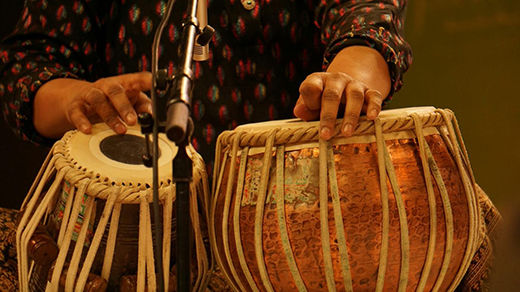
Picture Credits: Unsplash
Classical music involves more than simply mechanically mastering the notes; it is a slow, immersive process that rewires the mind in subtle and lasting ways. Its emphasis on patience, deep listening, and emotional awareness makes it especially relevant in a world that often rewards speed over depth. Whether it is calming the nervous system, building emotional resilience, or simply offering a space for reflection, learning Indian Classical Music reconnects us to a more mindful way of being, one where focus, expression, and inner balance are not just byproducts but part of the practice itself.
Cover Credits: Pexels