Vidhi Gupta
08-Aug-2026
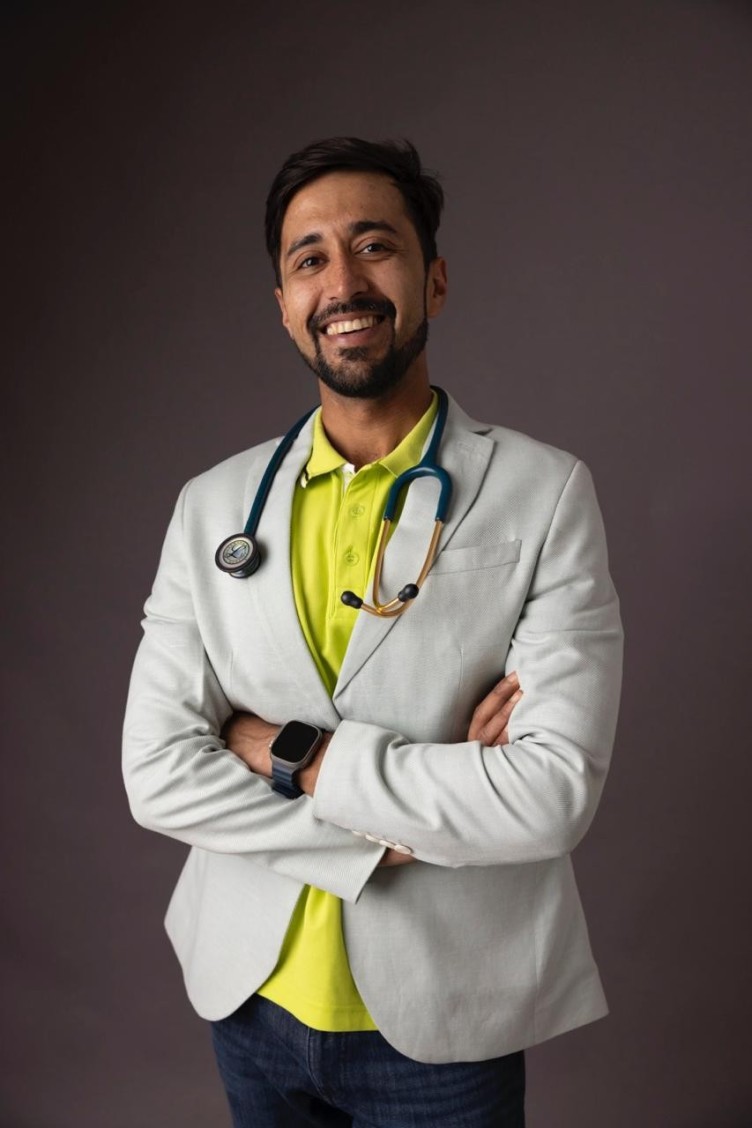
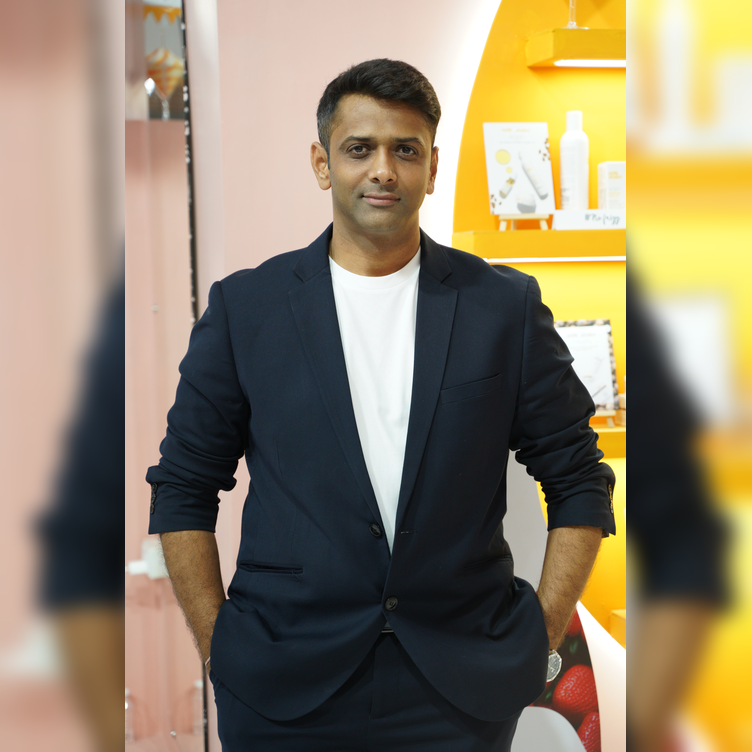
Known as India’s ‘Aquaman Biohacker’, Dr. Arpit Bansal talks about why the future of healing lies in water, the gut, and the five bodies we all carry.
After spending 15 years learning to remove diseases, the ocean taught Dr. Aprit Bansal to think differently about healing. A laparoscopic and cancer surgeon, longevity educator and gut-health specialist, Bansal’s journey from the operating theatre to underwater meditation has led him to a philosophy that looks beyond treating illness to understanding the conditions in which the body can thrive. His Five Bodies framework brings together the physical, emotional, mental and spiritual dimensions of wellbeing, with a fifth body centred on flow and coherence, and is pioneering underwater meditation as a nervous system reset.
Known as “The Aquaman Biohacker”, he is the Chief Scientific Curator of The Longevity Summit India 2026 at Fairmont Mumbai and the author of The Blue Mind and The Purple Mind Code. As he looks towards a future shaped by preventative and personalised medicine, Bansal talks about how India is uniquely placed to bring together ancient wisdom and modern longevity science; and how longevity extends beyond human health to extend to the natural world that sustains us.
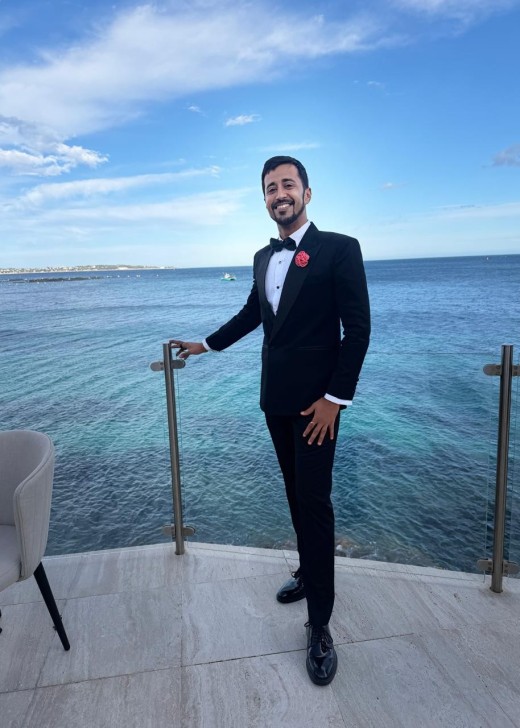
What first drew you towards medicine — and what inspired you to become a longevity educator and gut-microbiome advocate?
I grew up watching medicine at its most heroic. My father and mother were among the pioneer surgeons of Allahabad, and as a boy, I saw my father bring critically ill patients back from the edge, day after day. People spoke his name with reverence. I did not choose medicine so much as absorb it — I wanted to help people the way he did. And I deliberately chose cancer surgery, because cancer was the word that frightened people the most. If I was going to serve, I wanted to stand where the fear was greatest.
Then, after fifteen years at the operating table, a question began to follow me home: is removing a tumour the same thing as true healing? Water answered before I did. The ocean — diving, breath, stillness beneath the surface — opened a door to what I now call the Blue Mind, and longevity science and biohacking became my personal laboratory. I was blessed with good health, so for me biohacking was never about fixing something broken; it is the daily practice of becoming the best version of yourself — physically, mentally, emotionally and spiritually. Out of that journey came my Five Bodies framework: Earth, the physical foundation; Water, the emotional body; Air, the mental body; Fire, the spiritual body; and the fifth — the quantum body of flow and coherence.
And the gut microbiome? That, too, came from nature. I am a birdwatcher; I spend my life looking closely at ecosystems. We have done to our inner soil exactly what we did to our fields — depleted the soil microbiome with fertilisers and depleted the gut microbiome with the careless use of antibiotics. I am all for nature, and precisely because we have damaged nature’s pharmacy, I am also unapologetically for intelligent supplementation. Nature is my deepest inspiration; science is how I honour it.
“I was trained for fifteen years to remove the disease. The ocean taught me how to remove the cause.”
Do we spend enough time talking about cancer prevention rather than cancer treatment? What needs to change?
No — and I say that as someone who has spent his career treating it. Almost all of our attention, funding and conversation begin after the diagnosis. Three shifts are overdue.
First, prevention itself must become a discipline, not an afterthought. Second, we need what I call Medicine 3.0 thinking: optimising yourself before disease arrives — knowing your blood markers, getting annual testing, treating your baseline data as seriously as any prescription. Third, and most important, we must talk about root causes. Beneath cancer — and beneath most chronic disease — I see three recurring drivers: chronic sympathetic overdrive, gut dysbiosis and mitochondrial dysfunction.
For fifteen years I was taught how to remove the disease — excise the tumour, clear the margins. Nobody taught me how to remove the cause. The ocean did. The nervous system has two great states: the Red Mind — fight-or-flight, designed to switch on for minutes — and the Blue Mind — the calm, rest-and-digest state where repair actually happens. Modern life has left the Red Mind permanently on. And here is the uncomfortable truth from the operating theatre: you can give a patient the right surgery and the right molecules, but if they remain locked in chronic sympathetic drive, the terrain that grew the disease is still there. Shifting a person’s state — their frequency, their mindset, their nervous system — is not a soft extra. It is oncology’s missing half.
You advocate “structured hydration.” What does that mean?
Consider two numbers. Planet Earth is about 70 per cent water — and so is a newborn baby. By the age of sixty, the human body has drifted down towards 60 per cent. In a very real sense, ageing is chronic cellular dehydration — we dry out from the inside — and a growing body of research links that chronic cellular dehydration to hypertension, metabolic disease and even cancer risk.
Structured hydration means hydrating the cell, not just the mouth. Plain water gulped between meetings is not enough. It begins with eating your water — fruits and vegetables carry water in its gel-like, living, structured form, close to what scientists describe as the fourth phase of water inside our cells. It means pairing water with electrolytes, so it actually enters and stays in the cell. And it means embracing one of the most exciting tools in modern longevity practice: molecular hydrogen, a selective antioxidant that I consider a genuine gamechanger, now supported by a fast-growing body of studies, and elegant hydrogen-water devices.
When people tell me they drink three litres a day and still feel tired, dry and foggy, I tell them: you are watering the pot, not the root. Structure the water — through food, minerals and hydrogen — and the cell finally drinks.
“A newborn is 70 per cent water; a sixty-year-old is 60. Ageing is chronic cellular dehydration — we are quite literally drying out.”
What are the most overlooked habits that can significantly improve the quality of our later years?
The most powerful habits are the least glamorous. Sleep is the first — the master longevity drug, and it is free. Cellular hydration is the second, as we have discussed. The third is what I call the digital sunrise and sunset: protect the first hours after waking and the last hour or two before bed — no screens. Those windows belong to your own mind, and guarding them changes everything downstream, from hormones to sleep depth.
Fourth: breath. Not elaborate techniques — simply five minutes of coherent, focused breath awareness, two or three times a day. It is the fastest lever we have for moving from Red Mind to Blue Mind. Fifth: movement as a non-negotiable — walking daily, and crucially, muscle. This is where I lovingly challenge my yoga-loving country: yoga is beautiful, but it is not sufficient. Muscle training is non-negotiable, and your VO2 max — your cardiorespiratory fitness — is one of the strongest predictors of how long and how well you will live. Train it deliberately.
And the most overlooked habit of all: eat according to your gut, not according to your taste. Get your gut microbiome tested, learn what your particular inner ecosystem thrives on, and feed it accordingly. Your body always whispers, long before it shouts — if you listen.
What every-day dietary habits unknowingly damage our gut microbiome — and what simple practices help restore it?
The damage is rarely dramatic; it is cumulative. Sugar is the quietest saboteur — it feeds exactly the wrong residents of your inner ecosystem, which is why I removed it from my own life entirely. Ultra-processed foods do similar harm. Then there is the careless use of antibiotics — taken for every sniffle, they carpet-bomb an ecosystem that took years to build. Add to that eating purely by taste and craving rather than by what your gut actually needs, eating late into the night so the gut never rests, and eating the same narrow rotation of foods, and you have the modern gut: depleted, inflamed, and monotonous — our inner soil spoiled just as fertilisers have spoiled the soil of our fields.
Restoration is beautifully simple. Diversify your plants — the microbiome feeds on variety and fibre. Bring in traditional fermented foods, which every Indian kitchen once made instinctively. Give the gut a nightly fast so it can clean house. Spend time in nature — soil, forest, sea — because nature’s microbiome replenishes ours. Where diet cannot reach, use intelligent, ideally personalised supplementation and probiotics. And above all, test rather than guess: get your microbiome mapped and eat for the ecosystem you actually have. The gut is the first organ to shut down when we live in stress — and the first to come back to life when we return to calm.
What is your wellness philosophy — and what does your own routine look like?
My philosophy is the Five Bodies framework, which I practise through twenty-one measurable parameters. The Earth body — the physical — rests on five pillars: cellular hydration, gut health, VO2 max, muscle, and sleep. The Water body — the emotional — is trained through HRV, gratitude, nature therapy, and journaling. The Air body — the mental — through practices like NSDR (non-sleep deep rest), CO2-tolerance breathwork, and deliberate neuroplasticity: I am currently learning Spanish for exactly this reason. The Fire body is the spiritual dimension, and the fifth body is flow and coherence — entering the flow state and learning to stay there longer.
My mornings are sacred. I wake early and begin with journaling and five minutes of breathing beside a tree or a plant — my daily appointment with nature. Some mornings add red-light therapy, breathwork, or CO2-tolerance training. I drop my daughter to school, and then I run — running has been my core strength for years. Some days end underwater: thirty minutes of underwater meditation. Other days it is heart-coherence meditation or barefoot grounding. For strength I train with my own body — calisthenics, yoga, handstand practice — muscles over machines.
Two rules hold the whole day together. The first two hours and the last two hours belong to me — no phone, no sugar, no noise; that is when the mind consolidates and repairs. And before sleep, fifteen to twenty minutes of coherence meditation — a single habit that has transformed the quality of my sleep more than any device I own. Through the day: water, electrolytes, my supplements, and food chosen by what my gut tells me, not my tongue. Recovery is not the reward for the work. Recovery is the work.
“Recovery is not the reward for the work. Recovery is the work.”
How do you envision the future of wellness in India over the next decade?
Integrated, intelligent, and deeply personal. The next decade belongs to integrative medicine powered by AI. Every one of us will carry a living health dashboard — gut microbiome, resting heart rate, VO2 max, HRV, blood markers — and the physician of the future will read that dashboard the way we once read an X-ray. I will say it plainly: a doctor who looks only at an ultrasound and a blood report, and writes a prescription, without knowing the patient’s microbiome, fitness, and nervous-system data, is practising yesterday’s medicine. The whole direction of travel is precision and prevention — treating the terrain before the disease ever arrives. Personalised probiotics, matched to your individual microbiome, are already a reality.
And India is uniquely placed to lead. We are the civilisation that gave the world yoga, fasting, fermented foods and the science of breath — practices modern longevity research is now validating one by one. When that ancient wisdom is fused with modern data, India will not follow the global wellness movement; it will anchor it. The future is not coming — it is already here. The next decade is simply about making it reach everyone.
What’s next for you?
Water — always water. Soy agua: I am water. The project closest to my heart is bringing underwater meditation to the world, for the first time anywhere. We are launching regular underwater meditation sessions at Fairmont Mumbai, making it the world’s first Blue Mind hotel — a place where guests do not just rest beside water, but go into it to reset the nervous system itself. Alongside that, as Chief Scientific Curator of India’s first Longevity Summit, I am helping bring the world’s best longevity science home to Mumbai this August.
People ask me why — I am a busy surgeon, and I love surgery. The honest answer is: I am doing this for nature. Longevity cannot only be about extending human life; it must include the longevity of the planet that keeps us alive. I have had moments twenty metres underwater — playing with an octopus that chose, more than once, to reach out and meet me — that taught me more about intelligence, trust and presence than any textbook. My own “octopus teacher” moments, if you like. That is the future I am working towards: a generation that measures its biomarkers and touches the sea; that optimises the body and protects the ocean. We heal in water, and water heals through us. Trust the tide.

Irtiza Rana, Founder...

Shrishti Yadav &...