GlobalSpa
05-Dec-2025
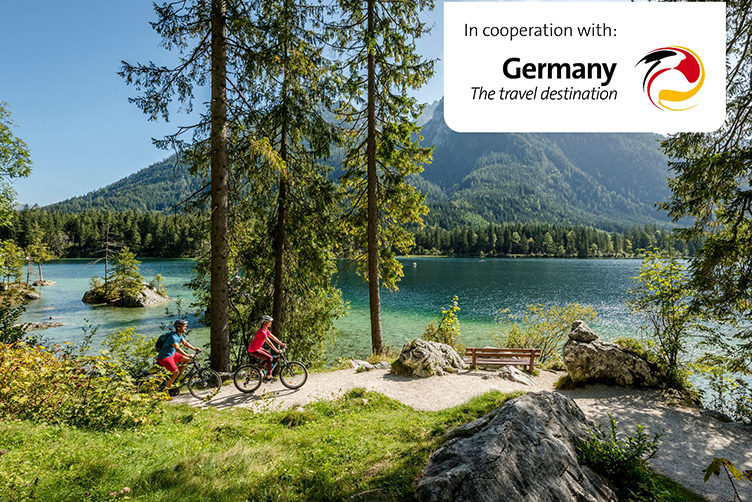
From trails to train tracks and rivers to ridges, every mood of movement offers a distinct lens to Germany’s natural heritage.
From footpaths to waterways, from bike trails to train tracks, Germany offers endless ways to fall in love with nature—again and again, from different angles and at different speeds. Whether you lace up your hiking boots, hop on a cycle, settle into a scenic train, or glide across serene waters, Germany offers countless ways to immerse yourself in its raw, refreshing, soul-stirring landscapes. This piece explores four beautiful ways to experience Germany’s natural side, each taking you to the country’s most breathtaking terrains.
Walking in Nature
Exploring Germany on foot is a decidedly intimate affair, allowing you to connect with the terrain at a human pace and access places that no wheels or engines can reach. Tracing forest trails, alpine paths and riverbanks, you experience the country at its most elemental, where every detail from the crunch of needles in a forest, the contours of rolling hills, to the cool hush of a mountain gorge is magnified.

(Saxon Switzerland: Hiking in the Elbsandstein Mountains, DZT/Jens Wegener)
One of the most notable ones is Zugspitze, which, standing at 2,962 meters, embodies Germany’s ultimate hiking achievement. Located near Garmisch-Partenkirchen in the Bavarian Alps, this mountain presents a multifaceted challenge that combines rocky scrambles, steep ascents and varied terrain. The Malerweg in Saxon Switzerland stretches 112-116 kilometres through the Elbe Sandstone Mountains, and winds through landscapes that have inspired centuries of artists, including Caspar David Friedrich. These marked trails flow through a geological wonderland featuring table mountains, gorges, and bizarre rock formations.
Whether commencing a multi-day expedition to explore the entire trails or engaging in specific parts of them on singular days, these offer a deeper, more textured encounter with Germany’s great outdoors.
Pedalling on Roads
Cycling offers an ideal balance for verdure outings: fast enough to thread several landscapes in a day yet slow enough to stop at a village bakery or linger at a viewpoint. The paths of Germany let you cover long distances without losing the sensory closeness of travel. With extensive natural foliage, Germany offers many routes for adventure.
The Elberadweg traces one of Europe’s most significant rivers through varied landscapes, through Dresden's cultural treasures, before continuing northward through Saxony and Saxony-Anhalt toward Hamburg. The Danube Cycle Path, on the other hand, is a continental-scale experience, spanning eight federal states from the Black Forest source to the Black Sea Delta.

(DZT/Felix Meyer)
The Altmühltal Cycle Route earns its reputation as a beginner-friendly route through its exceptional design, parallel to the Altmühl, Germany’s slowest-flowing river, creating an almost imperceptible downhill path from Rothenburg ob der Tauber to Kelheim. The Lake Chiemsee circuit combines mountain views with Bavaria’s Alpine scenery, featuring the magnificent Zugspitze and the Alps alongside the lake. Meanwhile, ferries between two lake islands diversify the cycling experience and provide rest opportunities
Moving on Rails
Trains facilitate a dramatic perspective, highlighting the scale of a terrain that is difficult to appreciate fully on foot or by cycle, and they do so in comfort and style. From a train window, the country becomes a moving tapestry of cinematic panorama. Regional trains travelling at slower speeds through mountainous terrain often provide superior scenic experiences, some of which are as follows: The Schwarzwaldbahn, also known as the Badische Schwarzwaldbahn, connects Offenburg to Lake Constance. The train climbs 650 metres vertically while traversing 39 tunnels and crossing two major viaducts through pristine Black Forest scenery. The hourly service, multiple stops, and possibility of multi-day exploration with overnight stays at intermediate towns transform this from mere transit into a deliberate scenic experience.

(DZT/Jens Wegener)
The Höllentalbahn, running from Freiburg through Titisee to Donaueschingen, is Germany’s steepest railway line, creating theatrical perspectives of steep rock faces and engineering that seemed impossible when it was constructed. Conversely, the Brockenbahn, a historic narrow-gauge steam locomotive railway, ascends the Harz Mountains’ highest peak from Wernigerode in Saxony-Anhalt. The journey witnesses a transition from developed valley towns through forested foothills to exposed alpine meadows, with opportunities to spot red deer, black woodpeckers, and wildcats during planned wildlife observation stops.
Rowing through Water
On the water, Germany’s nature softens into reflection. Water travel is the best way to experience tranquillity and wildlife, placing you at eye level with reeds, birds and stillness, far from roads and crowds. Germany’s vast waterbodies and natural parks offer many routes.
The Spreewald Biosphere Reserve encompasses interconnected canals and streams formed during the last Ice Age. These narrow waterways create an intimate scale, passing residents in their homes, observing wildlife habituated to regular paddler presence, and encountering traditional Spreewald villages whose economic and social structures historically centred on water transportation. The Upper Danube near Vohburg allows for a 28-kilometre paddle to Kehlheim at the mouth of the Rhine-Main-Danube Canal, flowing through forested mountains with light-coloured pebble banks characteristic of glacially fed waters.

(DZT/Florian Trykowski)
In Bavaria, the Isar River encompasses dramatically different sections ranging from leisurely family paddling near Munich to advanced whitewater experiences in the Berchtesgaden National Park and between Sylvenstein and Lenggries. The section upstream from Munich presents “an appearance of an unspoilt national park” with forested mountains enclosing valleys.
Thus, across mountains, rivers, forests, and coasts, Germany proves that nature is never a single setting but a shifting experience shaped by your rhythm of travel. Walking, cycling, paddling, and scenic train rides each open a different door into the landscape, offering connection over distance and clarity over haste. What becomes clear, regardless of the mode, is that Germany's natural beauty is best appreciated through movement.
Cover Image Credit: Cycling at Hintersee Lake, DZT/Günter Standl