Soumya Maheshwari
04-Jun-2026
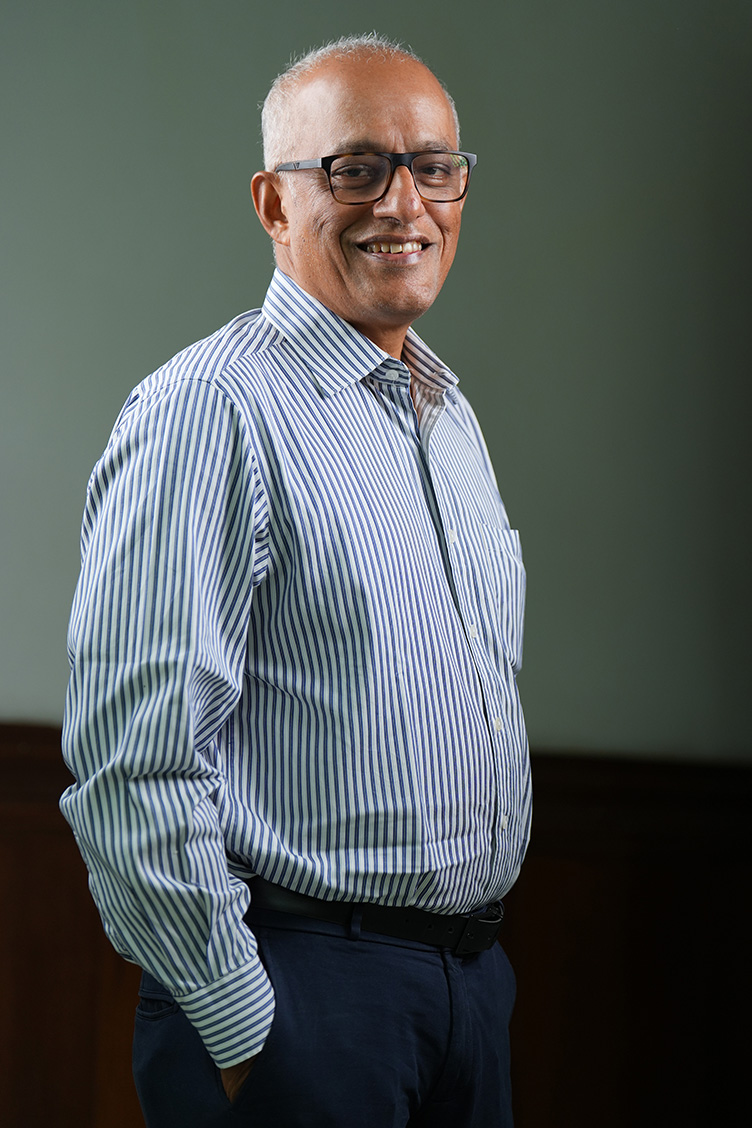
As CGH Earth expands across India, Managing Director Michael Dominic discusses sustainable luxury, wellness, slow travel, and why preserving local identity remains central to the brand.
“God lies in the details, waiting to be discovered" is the thought that has inspired CGH Earth since its inception in 1954 in Kochi. Today, 30 years later, with 20 unique holiday experiences and 4 wellbeing and curative retreats across Southern India and the Andaman and Nicobar Islands, the boutique chain has stood strong on its founding ethos and is setting a benchmark in sustainable luxury travel and experiential hospitality.
To put it simply, local architecture, people, cuisine, knowledge, tradition and customs woven with luxury and environmental sensibility is what you get here! Under Michael Dominic, the Managing Director of CGH Earth, the vision only grows, “ We keep reminding ourselves of what created CGH, and that we must never lose it"—a philosophy that has helped the brand earn recognition not only among Indian travellers but also on the global luxury travel map.
In conversation with Dominic, he reflects on the evolution of conscious travel, the future of wellness hospitality, and what’s next for CGH Earth.
1. CGH Earth has long championed the “luxury of conscience” before sustainability became a buzzword. How do you preserve that philosophy while scaling the brand?
The success of CGH has essentially been due to the environment and the local community. So, as we scale up, we try to make conscious efforts and ensure that the essence of CGH is always present in our properties.
2. You’ve spoken about building connected travel circuits rather than isolated luxury properties. How important is slow, immersive travel becoming for the modern luxury traveller?
Connected travel circuits are how our southern properties are positioned. Initially, when we started, it was mainly for the inbound market. Travellers would arrive at one airport — say, Chennai — and then move through a circuit: Mahabalipuram, Pondicherry, Thanjavur, Madurai, then into Kerala and Cochin, and fly out.
But after COVID, we noticed a significant shift. When CGH started, we were roughly 95% inbound and 5% domestic. Today, that's changed to approximately 65% inbound and 35–40% domestic. Most domestic travellers, instead of travelling to multiple destinations, might plan five days and experience one place thoroughly. However, the inbound traveller still follows the circuit format because they've come a long way and since they may not return a second time, they want to cover as many destinations as possible. That logic still holds.
Additionally, earlier, an Indian traveller might take one holiday a year. Now, younger couples, both working and with disposable income, are increasingly taking shorter trips but taking them more often.
3. Many hotel groups today are aggressively chasing standardisation and global replication. CGH Earth seems to focus more on local culture and context. Is that harder to sustain commercially?
Our strength is that all our properties are entirely different; there is no one format. For example, Spice Village is all about the forest, the local tribal community, and the plantations. The Coconut Lagoon is about Kerala's backwater architecture. Marari Beach is about the fishing village and the sea. Each property draws its identity from where it sits.
In a large chain hotel, whether you're in New York, Kochi, or Mumbai, once you walk in, the feeling is almost identical. For us, the destination has to come into the property. And that is increasingly being recognised as CGH's core strength: the ability to differentiate each property rather than homogenise them.
4. Do you think future luxury hospitality will become more interdisciplinary?
People travel for different reasons and move across destinations, exploring and experiencing them. But what we find is there's a growing market for people who want to travel to get away from the pressures of the world and their lifestyles and focus on one single aspect. For example, travellers are now willing to spend not just money but also time and commit two to three weeks to visit a destination that takes care of their health and wellbeing. And we find that people are willing to do this once, even twice a year.
5. And where do you see your focus going — leisure or wellness? Are these separate verticals for CGH?
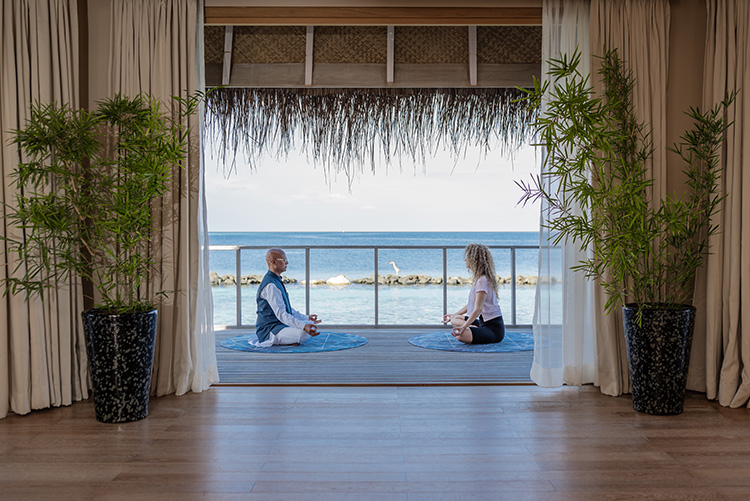
These two are independent verticals for us, and both have a strong future. But wellness is going to be enormous. India has a growing population that is rapidly moving into the middle and upper-middle classes. With rising incomes, lifestyle diseases are increasingly prevalent. And there is a growing consciousness that good health is not secondary to financial success — it is equally important, if not more so. That is why wellness is going to be a primary growth engine for CGH. We have been in this space for a long time, we have the expertise, and we have the strength of our heritage to build on.
6. CGH Earth has stayed relatively selective in its growth journey. How do you decide what opportunities to say no to?
We don't want to enter a crowded market just to have a footprint there. Our strength has always been in going to destinations where nobody else has gone. Marari is a perfect example. Before we put a property there, nobody knew it. It wasn't even called Marari — it was Mararikulam. We essentially created the destination by establishing a presence there and that has been a consistent part of our DNA.
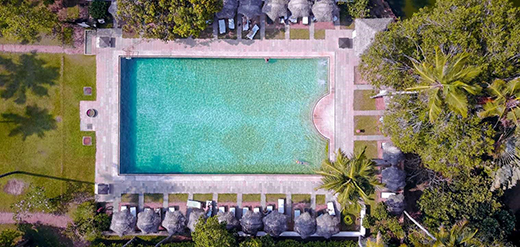
(Marari Beach Resort, CGH Earth)
7. But now there are other players in Marari and other unknown destinations as well. Does that eat into the market you created?
I don't think so. There are different segments within the market, and there's enough space for everyone. Different players cater to different traveller profiles. Our strength and positioning is fundamentally different from other large hotel chains. We don't see it as a direct challenge. If anything, more quality options in a destination can raise its overall profile and attract more travellers to the region.
8. India’s leisure hospitality landscape is seeing increasing interest from large global chains as well as private equity players. Do you think independent Indian hospitality brands can retain their individuality?
There will always be a space for independent Indian hotels. Hotel chains focus more on volume and that's their model and strength. But when I speak with travel agents, the message I consistently hear is that people are actively seeking out unique properties. There is certainly a market for large chains, but what travellers are telling agents is that they want something different and unique. That's precisely where independent properties differentiate themselves. We create a local experience.
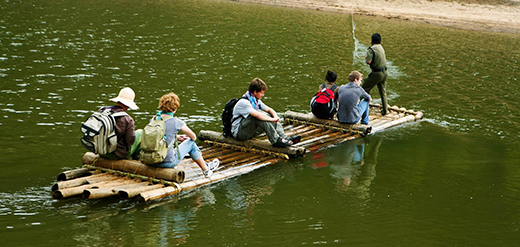
(Spice Village, Thekkady)
9. What other traveller expectations do you see changing in today’s time?
Indians have been travelling the world, and with each trip, they've grown more sophisticated. Today's traveller is more demanding, yes — but more importantly, more conscious. They think about how their travel impacts the environment, the local community, and the global ecosystem. They want to know, 'What are the environmental standards of the property? How is the local community connected to this place? And are the people of that region genuinely benefiting from tourism?
Responsible tourism is increasing. And as travellers become more sophisticated, they naturally become more responsible. The two go hand in hand.
10. What is the business model today — are these owned properties, or do you work on a franchise or management contract basis?
We started as a hundred percent owned hotel company. But we realised that the model meant slow growth, because each hotel investment has a long cycle. That meant a new property only every five to six years. So we evolved. We now work primarily on two models: the lease model, where we take a property on lease and pay the owner a percentage of revenue as rent; and the management contract model, where we run the property on behalf of an investor and charge a management fee.
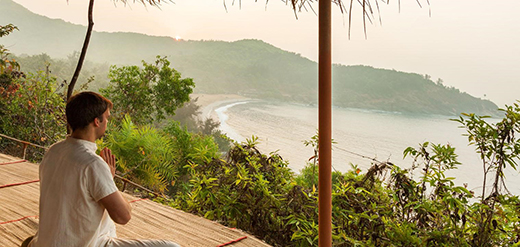
(SwaSwara, Gokarna, CGH Earth Wellbeing)
11. Looking ahead, what’s next for CGH? And will you enter metro cities, or does the focus remain on destination properties?
We started in Kerala, then expanded across South India, and today we are pan-India. We are opening properties in West Bengal and Uttrakhand, and we are already in discussions with investors looking to establish properties in Gujarat, Madhya Pradesh, and Rajasthan. CGH will definitively become a pan-Indian brand and eventually a pan-Asian one.
We do see real opportunity in properties located close to metro cities, in the form of wellness retreats within easy reach of urban centres. The demand is there, as many are looking for a place to step away and rejuvenate. So while we won't be checking into the city itself, we will certainly look at the periphery of metros as a meaningful opportunity, particularly as the wellness vertical continues to grow.
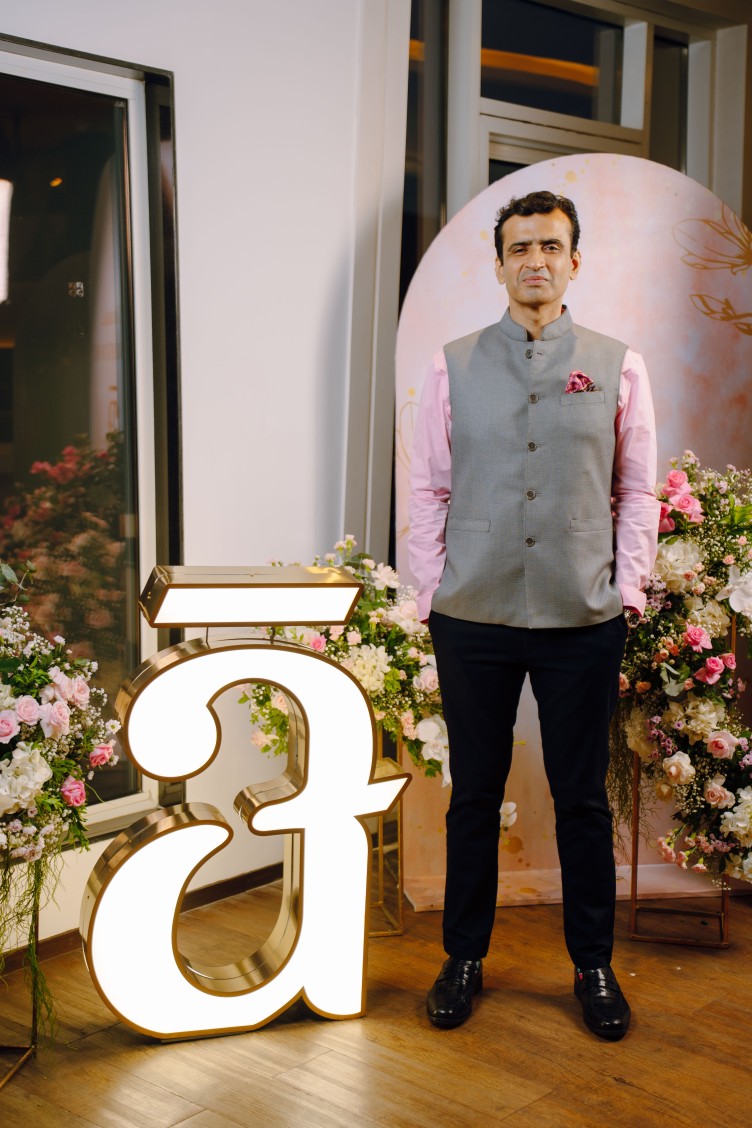
In Cover Image: Michael Dominic, Managing Director, CGH Earth