Oscar Pereira
08-Sep-2026

Why One Formula Doesn’t Work for Everyone.
By Oscar Pereira, Founder of CodeSkin
When it comes to sunscreen, the conversation often begins and ends with SPF. Higher numbers are perceived as better, and terms such as “broad-spectrum” and “water-resistant” are used as markers of performance. But there is another question that deserves equal attention: Is the sunscreen actually right for your skin?
SPF is an important measure of a sunscreen’s ability to protect against UVB radiation, but it does not tell you how the formula will feel on your skin, whether it will work with your skin type or whether you will enjoy wearing it every day. Two sunscreens with the same SPF can have entirely different textures, finishes, and skin-feel.1
That distinction matters because SPF may be universal, but skin is not.

Your Skin Type Changes the Equation
Dry skin, for instance, may respond better to a sunscreen with a comfortable, moisturising texture and a more luminous finish. A formula that leaves behind a nourishing layer can feel protective and pleasant on dry skin, but may feel excessively rich or greasy on oily skin, particularly in India’s heat and humidity.
Oily and combination skin generally benefit from lightweight textures that spread easily, absorb efficiently, and leave a matte or natural finish. However, there is a fine balance to achieve. An excessively mattifying sunscreen can leave the skin feeling tight or uncomfortable, which can discourage consistent use.
Acne-prone skin requires an even more thoughtful approach. Simply looking for an “oil-free” label is not enough. The overall formulation matters, including the choice of emollients, film-forming agents and emulsifiers, as well as how the sunscreen interacts with moisturisers, active skincare ingredients, sweat and sebum.
Then there is sensitive skin, where tolerance becomes particularly important. Some people tolerate organic UV filters extremely well and can comfortably use elegant, lightweight formulas with high levels of protection. Others may prefer mineral filters such as zinc oxide and titanium dioxide. Fragrance, alcohol, preservatives, and other components of the overall formulation can also influence how comfortable a sunscreen feels on sensitive skin.

It’s Not Just About Skin Type
There is also the question of personal preference.
Some people want a sunscreen that disappears completely into the skin. Others prefer the feel of a mineral formula. Some want an intensely matte finish, while others find matte sunscreens too flat and prefer something that leaves the skin looking naturally radiant.
Texture matters, too. One person may happily use a rich cream; another may only reach for an ultra-light fluid.
And this is where sunscreen formulation becomes particularly important. A sunscreen should not be formulated simply around its SPF rating; it should be formulated around the person who is going to wear it.
Of course, protection remains non-negotiable. A well-formulated sunscreen should provide appropriate broad-spectrum UVA and UVB protection, remain sufficiently photostable, and form a consistent protective film across the skin. Whether the formula uses organic UV filters, mineral filters such as zinc oxide and titanium dioxide, or a combination of both, its fundamental purpose remains the same: reliable protection from UV radiation.
But once those fundamentals are established, sensory experience becomes part of efficacy.
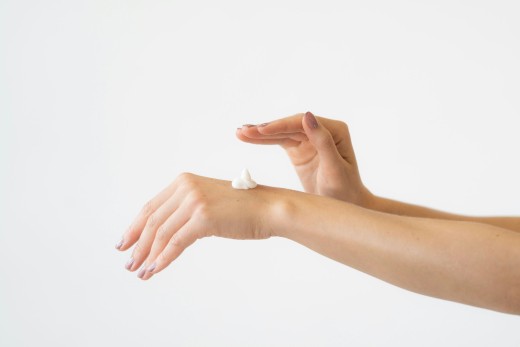
The Best Sunscreen Is the One You’ll Actually Wear
This may sound like a cosmetic consideration, but it has a practical consequence.
Sunscreen can only protect you if you apply enough of it and use it consistently. If a formula feels greasy, pills underneath makeup, leaves an unwanted cast, stings the eyes, or simply feels uncomfortable in the weather, there is a good chance you will eventually stop reaching for it.
A technically excellent sunscreen that sits untouched on your bathroom shelf is not doing much for your skin.
This is why choosing sunscreen should go beyond asking, “What is the SPF?”
Instead, consider the bigger picture: Does the formula suit your skin type? Does its texture work with your climate and lifestyle? Does it sit comfortably under makeup? Does the finish look and feel right to you? Most importantly, is it a product you can see yourself applying generously and consistently every day?
The best sunscreen is not necessarily the one with the highest number on the pack. It is the one that delivers meaningful, dependable protection and is formulated in a way that makes daily use easy.
Because when it comes to sun protection, consistency is ultimately what turns a good formula into effective skincare.
All image credits: Unsplash