Mallika Timblo, Founder of Terrapy
31-Jan-2026
Your hormones do a lot more than controlling your mood swings and menstrual cycle and it’s time we start listening to them.
We talk a lot about women’s health.
We talk about self-care, sleep, gut health, fitness, mental health, and now even longevity. And yet, the one system that affects almost all of it, our hormones, remains strangely misunderstood, underexplained, and often dismissed.
This is what I now see as the real women’s health crisis: not hormonal imbalance, not even misdiagnosis (which is a crisis in its own right), but hormonal illiteracy. Most women can name their period. Very few can name what drives it.
We grow up learning just enough biology to be embarrassed by our bodies, but not enough to understand them. Puberty arrives with a sanitary pad and a warning. Pregnancy comes with checklists. Menopause comes with jokes and hot flash memes. But nowhere in between are we taught how our internal chemistry actually works. How it shapes our mood, our sleep, our skin, our energy, our metabolism, or why the same stress hits us differently at 25, 35, and 45.
Instead, we learn to translate symptoms into character - “She’s moody.” “She’s anxious.” “She just can’t lose weight.” “She’s tired all the time.”
We rarely ask: what’s happening inside us?
Hormones are treated like background noise. When something goes wrong, we either medicalise it immediately or minimise it entirely. “It’s just stress.” “It’s just age.” “It’s just hormones.”
As if calling it “just” anything makes it any less real.Hormones don’t just control cycles and reproduction. They shape how we function. How we sleep. How we think. How we cope. And yet most women move through decades of their lives without a language for what’s happening inside them.
What we call “normal” is often just common.
Irregular cycles, bloating, acne in adulthood, crushing fatigue, mood swings, stubborn weight gain, anxiety that appears out of nowhere, sleep that is no longer deep. These aren’t rare. They’re routine. But because they arrive slowly, and because so many women experience them together, they get folded into the story of what being a woman is supposed to feel like.
And that’s the problem. When discomfort becomes familiar, we stop questioning it. Instead of asking what our bodies are trying to tell us, we learn to push through. Coffee for fatigue. Discipline for weight gain. Productivity for burnout. We become very good at functioning through imbalance.
Modern wellness hasn’t helped as much as we think. It has given us rituals, supplements, trackers, and retreats, but very little context. We have turned health into something we display, rather than something we understand.
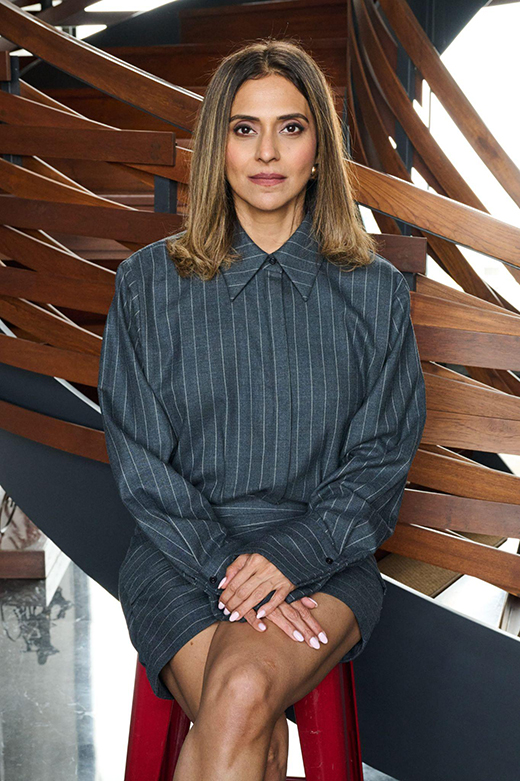
(Mallika Timblo, Founder of Terrapy)
We drink green juices without knowing why. We avoid foods without knowing what we’re avoiding. We blame ourselves for bodies that are actually asking for something else. Hormonal illiteracy isn’t about not knowing hormone names. It’s about not knowing how to read your own body. Real health literacy is pattern recognition. It is noticing what changes when your life changes.When women begin to see this, their relationship with their bodies changes.
They stop trying to control them and start trying to understand them. They ask different questions. They pay attention earlier, not only when something breaks. There is a space between wellness and medicine. Between symptoms and meaning. Between what women feel and what they’re told. Between the questions we ask doctors and the ones we never learned to ask ourselves.
What’s missing isn’t products or advice. It’s structure. Continuity. A simple framework that says: this is what’s happening, this is why, and this is what you can do about it in daily life.
Women don’t need more fixes.They need a way to make sense of what their body is doing. Hormonal literacy isn’t about turning women into doctors. It’s about restoring agency. It’s about making health something we take part in, not something that simply happens to us.
And this matters now. Women are living longer, carrying more responsibility across more life stages, and managing their own bodies alongside work, family, and ageing parents, often with little guidance on how these systems interact.
We’re expected to cope without being taught how.
The future of women’s health won’t be built only in clinics and products. It will be built in how women understand themselves. How early they notice change. How confidently they speak for their bodies. How they move from managing symptoms to making sense of them.
Real wellness begins with clarity.
When a woman understands what’s happening inside her, she no longer treats her body as something to battle. She treats it as something to read.
And that is where change begins.
Cover Credits: Pexels
Mallika Timblo, Founder...