Deepti Sharma
24-Nov-2026
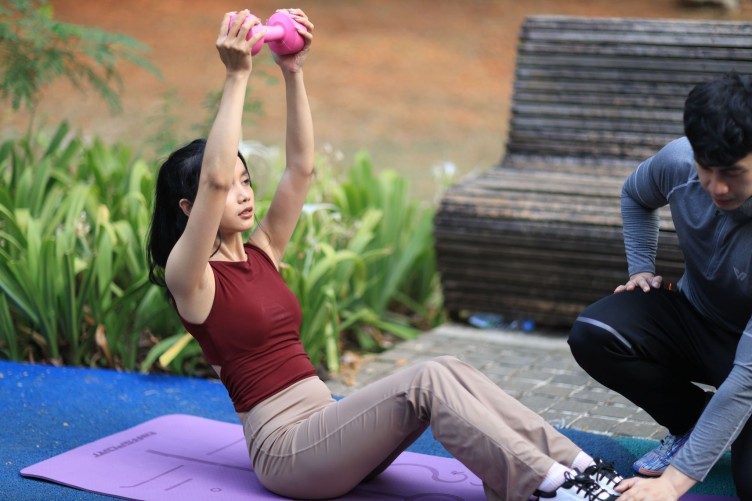
There’s a new rule making its way around the wellness world: your workout should change with your menstrual cycle.
By Deepti Sharma, fitness expert and director of Multifit
Your period? Gentle workouts.
Follicular phase? Time to lift heavy.
Ovulation? Go all out.
PMS? Apparently, it’s time to become one with your yoga mat.
The idea of cycle syncing has become popular for a reason. Our hormones do change throughout the menstrual cycle, and those changes can affect energy, mood, recovery, sleep and even how a workout feels.
But do you really need four different workout routines every month? Probably not.

The problem with turning cycle syncing into a strict fitness schedule is that women’s bodies don’t work quite that neatly. Your cycle can tell you something about how your body is behaving, but it doesn’t necessarily tell you exactly what workout you should be doing.
Your period doesn’t automatically mean “take it easy”
Menstruation is often treated like a mandatory recovery week. But if you feel completely fine during your period, there’s no reason you can’t continue strength training, running, cycling or whatever else you normally enjoy.
On the other hand, if you’re dealing with cramps, fatigue, headaches or just feeling like your body has filed an official complaint, backing off is perfectly reasonable too.
The point is not to push through everything. It’s also not to assume you have to slow down.
Pay attention to what’s actually happening.
Should you change your workout? Sometimes.
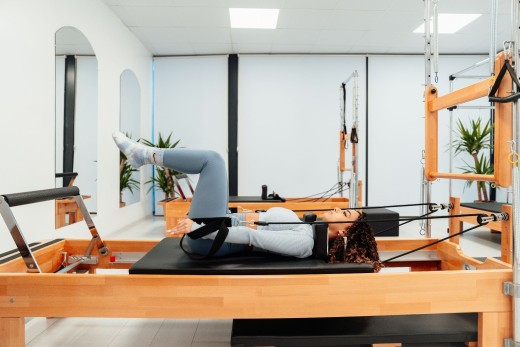
As your period ends, you may notice your energy returning and feel ready to increase your training intensity. If you feel stronger, you can progressively add resistance, volume or intensity.
Around ovulation, some women experience a noticeable boost in energy and performance. If that’s true for you, it can be a good time to challenge yourself with a harder workout.
Then comes the premenstrual phase, which can be a different story. PMS symptoms such as bloating, fatigue, mood changes, poor sleep or breast tenderness can make your usual workout feel considerably harder.
That doesn’t automatically mean skipping it.
Maybe you reduce the weights. Maybe you cut your HIIT session from 30 minutes to 15. Maybe you swap a hard run for a walk. Or maybe you feel absolutely fine and do your regular workout.
All of those are valid. The workout should adapt to you, not the other way around.
This is where the idea of cycle syncing can be useful, as long as we don’t turn it into another set of rules.
At MultiFit, for example, the emphasis is on building sustainable fitness rather than treating every workout as a test of willpower. The same principle applies here: your training should have enough structure to keep you progressing, but enough flexibility to account for the fact that you are, inconveniently, a human being.
Your cycle is one factor. It isn’t the only one.
Sleep matters. Stress matters. Nutrition matters. Recovery matters. Your workload matters. Even that particularly terrible day at work matters.
Two women can be on the exact same day of their cycle and feel completely different.
And even the same woman can feel different from one month to the next.
Start tracking your own patterns
Instead of downloading a colour-coded cycle chart and treating it like a command centre, try paying attention to your own body.
For a few months, track your cycle alongside your energy, sleep, mood, recovery and workouts. You might discover that you consistently feel strongest at a certain point in your cycle. You might notice that your runs feel harder before your period. Or you might discover that your performance barely changes at all.
That information is much more useful than a generic rule telling you what you should be feeling.
And it takes the pressure off.
You don’t need a new workout every week
The biggest misconception around cycle-based training is that you need an entirely different fitness programme for every phase.
You don’t.
A well-rounded routine can stay largely the same throughout the month. What can change is the intensity, volume or type of movement depending on how you feel.
Think of it as having one good workout wardrobe rather than four completely different wardrobes. You still have all the same pieces. You just choose what fits the day.
The goal is not to train perfectly according to your hormones.
The goal is to understand your body well enough to know when to push, when to modify and when to recover.
Your menstrual cycle can be useful information. It just doesn’t need to become your personal fitness manager.
Train with your body, not against it. And give yourself permission to change the plan when your body asks you to.