Gyanendra Singh Shekhawat
25-Aug-2026
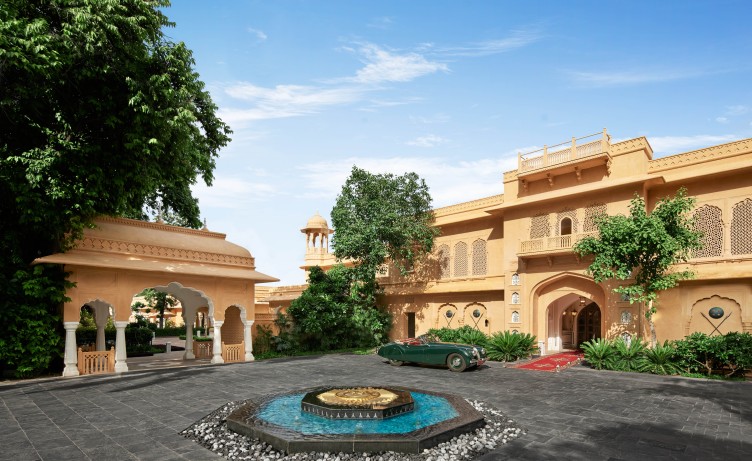
There is a growing appreciation for timeless craftsmanship, climate-responsive architecture and the richness of India’s regional identities.
By Gyanendra Singh Shekhawat- Founder and Principal Architects, IDEAS
India’s architectural heritage is one of its greatest cultural assets. From palaces and forts to colonial buildings and historic residences, these structures embody centuries of craftsmanship, history and regional identity. Yet, preserving them has become increasingly challenging. As maintenance costs rise and original functions diminish, many historic buildings face neglect. In this context, luxury hospitality has emerged as a meaningful way to ensure that heritage buildings continue to live rather than merely survive.
At IDEAS, we believe that the most successful conservation projects are those that respect the past while making it relevant for the present. Adaptive reuse is not simply about converting a palace into a hotel; it is about giving a historic building a sustainable future without compromising its character.
Over the years, we have had the privilege of working on several heritage hospitality projects, including Rambagh Palace, Jai Mahal Palace, The Maharaja’s Lodge, Taj Lake Palace, Taj Pushpabanta Palace and Taj Palitana Palace. Each project has reinforced one important lesson: every heritage building has its own story, and the role of the designer is to reveal that story—not rewrite it.
True conservation begins with understanding the architecture, materials and cultural context of a place. Original stone, lime plaster, timber, handcrafted details and historic spatial planning should never be treated as obstacles to modern luxury. Instead, they become the defining elements of the guest experience. Contemporary interventions should remain discreet, ensuring that modern comforts integrate seamlessly without overwhelming the authenticity of the architecture.
One of the most encouraging trends today is the resurgence of classical architectural and interior elements. Arches, courtyards, handcrafted stonework, traditional flooring, lime finishes, intricate woodwork and artisanal textiles are returning to contemporary hospitality design. This revival is not driven by nostalgia alone; it reflects a growing appreciation for timeless craftsmanship, climate-responsive architecture and the richness of India’s regional identities. More importantly, it creates opportunities for traditional artisans whose skills have been passed down through generations, ensuring that these crafts continue to evolve rather than disappear.
Today’s luxury traveller is also redefining hospitality. Guests increasingly seek experiences rooted in authenticity rather than extravagance. They wish to connect with local culture, understand the history of a place and experience architecture that cannot be replicated elsewhere. This shift has encouraged developers to invest in conservation instead of demolition, recognising that heritage itself has become one of the greatest luxuries.
However, hospitality is not a universal solution. Commercialisation should never overshadow conservation. When heritage is over-restored, excessively recreated or reduced to a themed experience, its authenticity is lost. The challenge lies in finding the right balance between preserving the original spirit of a building and introducing contemporary functionality. Every intervention should be guided by research, restraint and respect for the existing fabric.
Can luxury hotels save India’s heritage? We believe they can—but only when conservation remains the primary objective and hospitality becomes the means to sustain it. Heritage buildings should continue to evolve as living places, not frozen monuments. When architecture, craftsmanship and culture are preserved with integrity, these spaces become more than destinations; they become custodians of our collective memory.
True luxury is not measured by opulence, but by the ability to preserve the identity of a place while allowing it to inspire future generations.