GlobalSpa
05-Dec-2025
An art lover’s guide to Germany’s most iconic museums, creative districts, and cultural treasures.
Germany is a dream destination for art and culture enthusiasts. It is one of those places where art doesn’t just sit behind glass but lives in the cities, the streets, and the local stories. Whether you’re stepping into a grand museum hall, wandering through a modern gallery, or spotting a clever mural on a neighbourhood wall, the country makes it easy to feel connected to its creative spirit.
Each city adds its own personality to the mix: Berlin brings bold contemporary energy, Munich champions heritage and world-class collections, Frankfurt blends innovation with tradition along its museum-lined riverbank, and Dresden balances baroque beauty with a surprising streak of street art. For travellers who love discovering culture from different angles, Germany offers countless moments of inspiration. This guide brings together the best museums and art experiences that truly capture the country’s cultural soul.
1. Berlin

(James Simon Gallery, GNTB/Felix Meyer)
Berlin’s cultural landscape is a treasure trove for art lovers. Begin at Museum Island, the city’s UNESCO-listed cultural heart, anchored by the striking James-Simon-Galerie—a modern architectural masterpiece by David Chipperfield that serves as the gateway to the island’s world-renowned museums. Here, explore the Pergamon Museum with its monumental Ishtar Gate, the Neues Museum’s legendary Nefertiti bust, and the Alte Nationalgalerie’s rich collection of 19th-century paintings and sculptures. For contemporary art devotees, Hamburger Bahnhof – National Gallery of Contemporary Art offers an impressive lineup from Warhol to cutting-edge installations, while the Berlinische Galerie dives deeper into the city’s own avant-garde and photographic heritage. No art tour is complete without a stroll along the East Side Gallery, where the remnants of the Berlin Wall burst into colour as one of the world’s largest open-air murals.
Alternatively, the showrooms, such as König Galerie and BQ Berlin, are home to changing, eclectic exhibitions curated to excite Berliners and international design lovers alike. Experience the history and stories in an immersive way at the Deutschland Museum, and explore everyday life in the GDR up close at the interactive GDR Museum.
2. Munich

(Alte Pinakothek in the Kunstareal in Munich, GNTB/Dagmar Schwelle)
The people of Munich are proud of the city’s cultural institutions—many of which enjoy international acclaim—beginning with the legendary Deutsches Museum, the world’s largest museum of science and technology, where innovation, engineering, and human curiosity come alive across interactive halls. Art lovers can wander through the city’s celebrated “Kunstareal” (art district), home to the Alte Pinakothek with its exceptional Old Master paintings, the Neue Pinakothek dedicated to 19th-century European art, and the Pinakothek der Moderne, a powerhouse for modern art, design, architecture, and graphic arts. Equally iconic is the Lenbachhaus Museum, renowned for its unparalleled collection of Blue Rider (Der Blaue Reiter) works, and the vibrant Brandhorst Museum, which shines with contemporary pieces, including one of the world’s largest Andy Warhol collections.
3. Frankfurt

(Frankfurt: Städelmuseum Altmeister, Städel Museum, Frankfurt)
Frankfurt may be known as Germany’s financial powerhouse, but its cultural offerings are just as impressive, anchored by the city’s iconic Museumsufer—a picturesque stretch along the Main River dedicated entirely to world-class museums. At its heart lies the prestigious Städel Museum, one of Germany’s oldest and most important art collections, spanning 700 years from Renaissance masters to contemporary visionaries. Nearby, the Schirn Kunsthalle showcases exhibitions that push artistic boundaries, while the Museum of Modern Art (MMK), famed for its bold triangular architecture, presents one of Europe’s most dynamic modern and contemporary collections. History and natural science enthusiasts can dive into the fascinating exhibitions at the Senckenberg Natural History Museum, home to towering dinosaur skeletons and biodiversity showcases. Literature lovers will find inspiration at Goethe House, the beautifully reconstructed birthplace of Germany’s most celebrated writer.
4. Dresden

(Dresden: The Old Masters Picture Gallery, DZT/Francesco Carovillano)
Dresden offers a well-balanced mix of world-class museums and a growing street art culture, making it an excellent destination for travellers who enjoy both classical and contemporary creativity. The city’s major cultural institutions fall under the Staatliche Kunstsammlungen Dresden, one of the most important museum groups in Europe. The Old Masters Picture Gallery is the star attraction, home to Raphael’s Sistine Madonna and an impressive collection of European masterpieces. Just nearby, the Green Vault showcases the remarkable treasures of Saxon royalty. This vault was commissioned by King Augustus to house his personal collection of unique treasures from around the world and houses one of the most impressive collections of
treasures. For a shift into more modern territory, the Albertinum offers a strong collection of Romantic, Impressionist, and contemporary works, making it a great stop for visitors looking to explore art from the 19th century onwards.
Outside the museums, Dresden’s creative energy spills onto the streets—especially in the lively Neustadt district. This neighbourhood has become the city’s hub for street art, with large murals, colourful facades, and constantly evolving graffiti. The Kunsthofpassage is a must-visit: a cluster of themed courtyards that has playful design elements like the famous “Singing Drainpipes,” along with eye-catching artwork and boutique spaces.
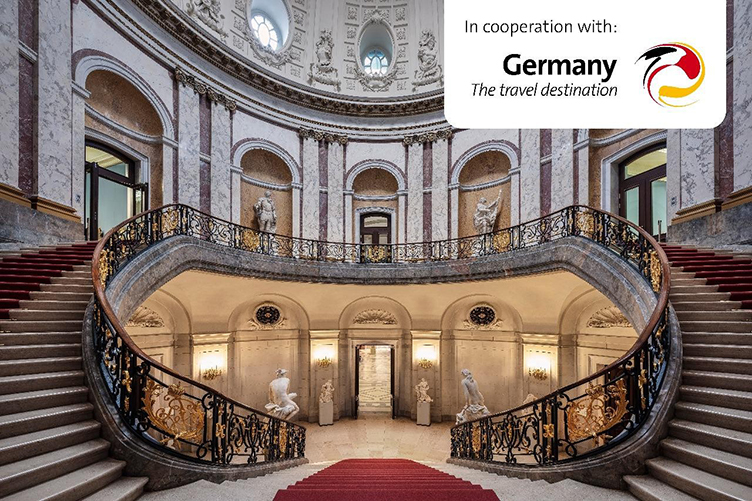
Cover Image Credit: UNESCO Museumsinsel, Berlin - Bode Museum, Lookphotos/Guenther Bayerl