

Dr. Ksenia Butova
12-Sep-2026

Dr. Ksenia Butova on prevention, healthspan, and building the medicine of the future in Dubai
Dr. Ksenia Butova is a physician and entrepreneur, and the Founder & CEO of Longevium Dubai — one of the UAE's fastest-growing longevity clinic networks, spanning three clinics and nearly 100 healthcare professionals.
1. You trained and practiced as a vascular surgeon before founding Longevium. What inspired you to move beyond treating disease and instead build a clinic focused on preventing it?
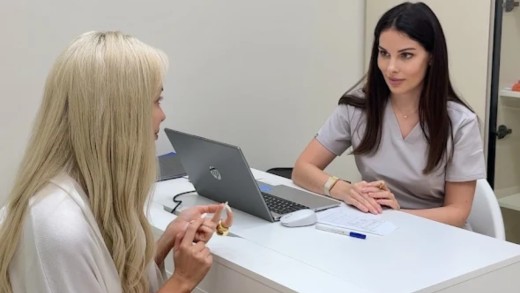
Vascular surgery taught me something I couldn't ignore. By the time a patient reaches the operating table, the disease has usually been building quietly for twenty or thirty years. I was repairing arteries that had been narrowing since the patient was in their thirties. I got very good at fixing damage — and more and more frustrated that I was almost always arriving too late.
In surgery, you see the end of the story. You rarely get to change the beginning. And the more of those cases I treated, the clearer it became that most of them were not inevitable. The warning signs were there, and measurable, decades earlier. No one had looked.
Longevium was my decision to move to the start of the story instead of the end — to work with people while their path can still be changed, not after the damage is done. Surgery is an amazing tool, but it's a response to failure. I wanted to spend my career stopping that failure from happening in the first place.
2. Healthcare has traditionally been reactive — patients seek help once something goes wrong. What convinced you that prevention and longevity represent the next evolution of medicine?

Two things happened at the same time. The science of aging grew up, and measuring it became affordable.
For most of history, "prevention" meant vague advice — eat well, move more, don't smoke — because we had no way to see problems early or check whether anything was working. That has changed. We can now measure biological age, how well your body handles energy, inflammation, and heart risk years before you feel a single symptom. Prevention stopped being a slogan and became something you can actually track.
Once you can measure something, you can act on it in a smart way. That's the whole shift. Reactive medicine waits for the disease to show up — but by then it has already done most of its damage. Prevention works in the window where you still have real influence. Every serious study points the same way: the biggest gains in health now come from acting earlier, not from better late treatment. I wanted to help build that, not just read about it later.
3. Why did you choose Dubai as the home for Longevium? What makes the city uniquely positioned to become a global destination for longevity medicine and health innovation?
Because Dubai treats longevity as infrastructure, not as a trend.
In 2026 the government created the Dubai Longevity Authority — a whole official body with one job: healthy aging. In most of the world, longevity medicine has no real regulatory home at all. It falls between agencies and gets lost in paperwork built for a slower era. Here it has a government behind it and clear rules in front of it. That changes what a clinic can responsibly offer.
The result is clarity. Advanced tests and regenerative treatments that sit in a grey area elsewhere operate here inside a proper, licensed, doctor-supervised system. Patients now fly in from the UK, Canada, and the United States specifically because of that.
And it isn't only the rules. Dubai is a truly international city with people who take prevention seriously. The culture of exercise, recovery, and daily health is real here, not niche. You have the government, the patients, the talent, and the ambition all in one place. That mix is very hard to find anywhere else — and it's why I believe this city can become the capital of the medicine of the future.
4. We often celebrate living longer, but Longevium talks about extending "healthspan" rather than simply lifespan. What does that distinction mean, and why should people in their 40s and 50s care today?
Lifespan is how long you live. Healthspan is how long you live *well* — the years you stay strong, sharp, independent, and free of disease. They are not the same thing, and the gap between them is where most suffering happens. For many people that gap is the last ten to twenty years of life, spent in decline.
Our goal isn't just to add years at the end. It's to shrink that period of decline — to keep you at your best for as long as possible, and make the frail chapter shorter, not longer.
Your forties and fifties matter because this is the deciding window. The things that shape how you age — rising blood sugar, changes in your arteries, loss of muscle, low-level inflammation — are already happening, usually silently, and they can still be changed. Wait for symptoms and you're managing a disease. Act now and you're steering the outcome. Healthspan isn't something you deal with in your seventies. It's something you protect in your forties.
5. Traditional annual check-ups often suggest everything is "normal," yet patients still don't feel their best. What are the biggest blind spots of onventional healthcare that your clinic is designed to uncover?

The word "normal" is the problem. Standard ranges are just averages — and the group they come from is mostly unhealthy. Being "normal" often only means being average in a sick population. That's not the same as being healthy, and it's certainly not the same as being on a good path.
Regular check-ups have three blind spots. They test too few things, so they miss the early signals. They read each result as a single snapshot instead of a trend, so they can't see which way you're heading. And they compare you to "not sick yet" instead of "thriving."
Here's a common example. Blood sugar can look perfectly normal for years while insulin has been quietly climbing the whole time, as the body works harder to keep up. The standard test calls that person healthy. We would have caught it a decade before the blood sugar ever moved. That decade is the whole opportunity. Our job is to find the signal that "normal" hides — and act on it while it still matters.
6. Longevium analyzes far more than a routine blood test. Which biomarkers do you believe deserve far more attention because they can reveal future health risks years before symptoms appear?
We look at aging from several angles at once, because no single test captures it.
The first is your biological age. From a standard blood panel — things like albumin, glucose, inflammation, and a few blood-count markers — we can calculate a validated biological age score (PhenoAge). It tells us whether your body is running ahead of or behind your actual age. Alongside it, newer epigenetic clocks such as DunedinPACE read your DNA to estimate how *fast* you're currently aging — not just where you are, but which direction and how quickly you're moving.
For heart risk, a marker called ApoB is far more useful than a standard cholesterol test, because it counts the actual number of harmful particles in your blood. For how your body handles energy, long-term blood sugar (HbA1c) is key, because it drifts upward quietly for years. And for inflammation — one of the great silent drivers of aging — we look at hs-CRP and IL-6, which rise long before you feel anything.
Then there are the markers most check-ups skip entirely: your physical function. Grip strength, walking speed, and balance are among the strongest predictors we have of how well someone will age and how long they'll live — and they cost almost nothing to measure. Most doctors never test them. We do, every time.
Body composition is a biomarker in its own right, too. Using a DEXA scan we can see muscle mass, and especially visceral fat — the fat around your organs — which ordinary weight and BMI completely miss.
Most of what I've just described is well established and, in many cases, inexpensive. It's simply not part of the standard visit — and it should be.
At the frontier, we also work with newer cellular markers of aging: telomere length, NAD+, Klotho, and GDF-15, a marker linked to how well your cells' energy systems are working. And that leads to one area I'm especially excited about — measuring mitochondrial function directly. Mitochondria are the tiny power plants inside your cells; they make most of the energy your body runs on, and how well they work is closely tied to energy, recovery, and how you age. Until recently this was hard to measure outside a research lab. Now we can assess it from a simple dried blood spot — a few drops from a finger-prick, which you can do at home here in Dubai. The sample is then analyzed by a specialist laboratory in San Diego, using technology originally developed for NASA's twin astronaut study. Some of these newer markers, like telomere length, are still best read as descriptive rather than definitive — the science is young — but as a way to see how your cells are actually doing, and to track it over time, I think this is one of the most interesting frontiers in longevity testing.
7. Metabolic health sits at the center of your philosophy. What exactly does metabolic health mean, and why do you consider it one of the strongest predictors of healthy aging?
Metabolic health is, put simply, how well your body makes and uses energy — how well it handles sugar, insulin, and fat, and how steady that system stays over time.
It sits at the center because when it goes wrong, it drives almost all the major diseases of aging. Heart disease, type 2 diabetes, many cancers, fatty liver, and even a lot of memory decline share this same root. So when you improve someone's metabolic health, you're not fixing one disease — you're pulling a lever that affects many of them at once.
It's also one of the strongest early warnings, because it starts to go wrong so quietly. Insulin can be creeping up for ten years or more before a standard test shows anything is off. That makes it both an early signal and a powerful place to act — you can see it before symptoms, and it responds well to changes in food, movement, sleep, and muscle. If I could track only a few things about someone's long-term health, their metabolic markers would be near the top of the list.
8. Longevium developed its own AI platform, Longevity Brain. In simple terms, what does this system actually do during a patient's consultation?

Longevity Brain is the engine behind every visit. Its job is to do the work that used to eat up most of a doctor's time, so the doctor can spend the visit actually thinking.
A patient's data usually arrives scattered — blood tests in one place, body scans in another, imaging somewhere else, wearable data in an app. Longevity Brain pulls it all into one place first. It reads each report whatever the format, pulls out the real numbers, puts everything on the same scale, checks that the records really belong to the same person, flags anything odd, and rates each source for how reliable it is — all before a doctor sees it. Then it works out a biological age and highlights the patterns that matter.
So by the time our doctors sit down with a patient, they're not squinting at five different reports trying to line them up. They're looking at one clean picture of that person, with the important signals already marked. The system does the sorting and the checking. The medical decision is still entirely theirs. It makes the visit faster, more accurate, and much more focused on the person in front of them.
Just as important, Longevity Brain is always up to date. It's connected to the latest medical evidence and guidelines and refreshes in real time, so the recommendations it supports are never based on outdated information. And it keeps working between visits: as new results and wearable data come in, it constantly checks each patient's progress against their own goals and against best practice — quietly confirming that everything is going in the right direction, and alerting the doctor the moment something drifts off track. It's like having a second set of eyes on every patient, all the time, not just on the day they come in.
9. One of the platform's most interesting features is its "personal longevity memory." What does that mean in practice, and how does it improve long-term patient care?
Personal longevity memory means the system never forgets anything about your health, and always compares you to *yourself* rather than to an average.
In normal care, your history is scattered and often lost — a folder here, a result there, a new doctor each time who starts almost from zero. Longevity Brain does the opposite. It keeps one continuous, organized record of every result over time, and lines each new one up against all the ones before it.
That changes the questions we can ask. Instead of "is this number inside the normal range?" we can ask "is this better or worse than *you* were eighteen months ago, and which way are you heading?" That's a far more useful question, because real change often happens entirely inside the so-called normal range.
It also solves a very real problem for our international patients, whose history no longer lives in one country. Someone can do their tests in Dubai, go home, keep tracking in the same app, and come back with a complete record instead of a pile of mismatched printouts. Over time, that memory becomes the foundation of a personal health model — the start of what people call a digital twin.
10. AI in medicine often raises concerns about replacing doctors. Where do you believe AI adds the greatest value, and where is human clinical judgment absolutely irreplaceable?
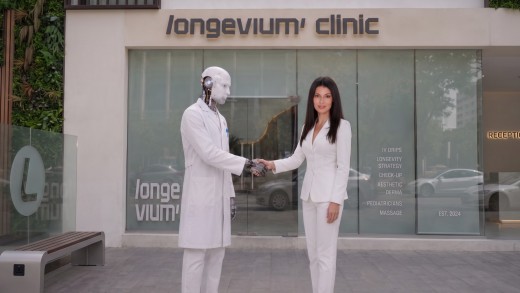
AI is most useful exactly where people are weakest: scale, consistency, and memory. It can read huge amounts of data without getting tired, keep everything organized, never forget an old result, spot a pattern across years of history, and quietly check everything for errors. It does the heavy, repetitive work perfectly. That makes medicine both faster and safer.
But it doesn't make the decision. People are irreplaceable at the moment that matters most — where the data meets the actual person. A number on a screen doesn't know what a patient values, what they're afraid of, or what they can realistically stick to. Two patients with identical results may need completely different conversations. That takes context, empathy, and responsibility — and responsibility is not something you can hand to a machine.
I think of it as a co-pilot, not a replacement. The AI handles the instruments; the doctor flies the plane and is responsible for where it lands. At Longevium, a doctor always reads the result before anything is prescribed. The technology earns its place by making our doctors better — never by standing in for them.
11. Technology is transforming healthcare, but lifestyle still matters enormously. In your experience, which everyday habits consistently deliver the greatest return on long-term health?
After all the tests and technology, the biggest wins still come from a short list of simple basics — and they beat anything you can buy.
Sleep comes first, because almost everything else — energy, mood, appetite, recovery, heart health — gets worse when sleep does. Protecting it is non-negotiable.
Strength comes second. Muscle is one of the most important organs for aging well. It supports how your body handles energy, protects you from becoming frail, and is one of the clearest signs of how well someone will age. Regular strength training, plus some steady cardio, does more for long-term health than almost anything else I know.
Then food built around whole ingredients and enough protein, rather than any trendy diet. Not smoking. And — genuinely underrated — managing stress and keeping strong relationships, both of which show up in the body in ways we can measure.
None of this is new, and that's the point. Patients often hope the future of medicine will let them skip the basics. It won't. What technology does is show you which of these matters most *for you*, and prove that it's working. It makes the basics personal — it doesn't replace them.
12. Longevity medicine is surrounded by supplements, biohacks and bold marketing claims. What are the biggest myths you regularly find yourself correcting?
The biggest myth is that longevity comes in a bottle or a gadget — that the right supplements or device is the secret, and the basics are optional. It's the other way around. The fancy stuff is a small part at the top. The foundation is sleep, muscle, healthy energy balance, and not smoking. People want to buy the roof before they've built the foundation.
Second is the idea that more is better — endless supplements and constant treatments. Most have weak evidence, some interact with each other, and very few have been shown to actually lengthen a healthy life. I spend a lot of time helping patients *stop* taking things.
Third is "detox." Your body already has a detox system: the liver and kidneys. Cleanses are marketing.
Fourth is the belief that one biological-age test or one number is the final verdict. No single number defines you. What matters is the trend across many, over time — which is exactly why we never let one result take over.
And finally, the idea that longevity is only for the rich or the extreme. The steps with the strongest evidence are mostly free. My job is to be the calm, evidence-based voice in a field that's unusually full of noise.
13. Finally, if you could change one belief people have about aging, what would it be? And what is the first practical step anyone can take today to begin improving their healthspan?
The one belief I would change is that aging just happens *to* you — that it's a fixed fate you have to accept. It isn't. Aging is a biological process, and a process can be measured, understood, and influenced. You have far more say over how you age than most people realize. Genes load the gun, but your daily choices decide a huge amount of what actually happens. That's not wishful thinking — it's what the data shows.
The first practical step is simple: get a real baseline. Most people know their bank balance to the last cent but have no idea about the numbers that actually shape their future — their ApoB, their fasting insulin, their blood sugar, their body composition, their biological age. You can't improve what you've never measured. Knowing where you really stand turns aging from something scary and vague into something clear and manageable.
And while you arrange that, start tonight with the two highest-return habits there are: protect your sleep, and start building muscle. You don't need to wait for a clinic to begin. You just need to decide that your future health is something you get to shape — because it is.
Longevium Dubai — Building the Future of Longevity

Shrishti Yadav &...