Sylvia Liu
08-Sep-2026
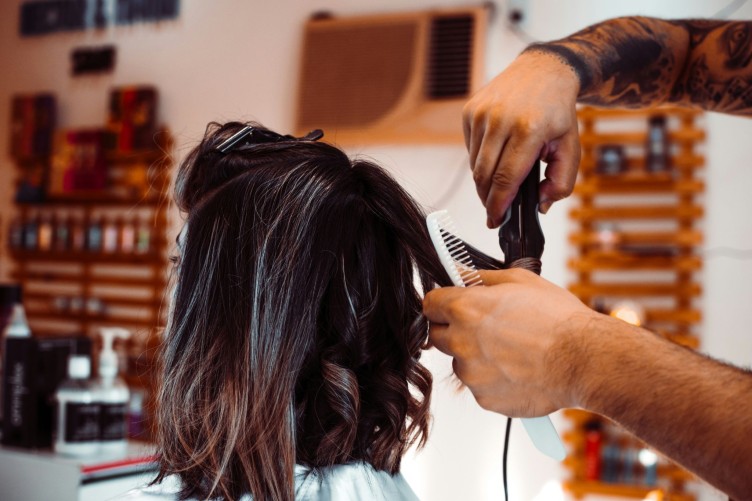
A haircut, after all, is not only about transformation. It is about maintenance.
By Sylvia Liu, Education Head - Geetanjali Salon
There is a particular moment when a haircut begins to reveal its age. The ends lose their movement, a once-defined shape starts to soften, and the hair no longer falls quite as effortlessly as it once did.
A haircut, after all, is not only about transformation. It is about maintenance—and knowing when to intervene.
There is no universal rule for how often you should cut your hair. The right rhythm is dictated by the cut itself, the texture of the hair, its condition and the way it is worn.
Short, architectural cuts demand precision. Pixies, sharp bobs and sculpted shapes typically benefit from a refresh every 4–6 weeks, allowing the original silhouette to remain intentional rather than simply grown out.
For medium and longer lengths, the interval can be more relaxed—around 8–12 weeks. This is particularly relevant for those growing their hair. A trim does not need to mean losing length; it can simply mean refining the ends and removing what is compromised.
For hair that is coloured, lightened or frequently heat-styled, maintenance becomes even more important. A trim every 6–10 weeks can help manage dryness and breakage, keeping the lengths looking considered rather than overworked.
Then there is curly and textured hair, where the approach is less about following a calendar and more about understanding the individual hair. Curl pattern, density and the desired shape all influence how frequently it should be cut. The right stylist knows that textured hair has its own architecture.
And what about the perennial question: Does cutting your hair make it grow faster?
No. Hair grows from the scalp, not the ends. But maintaining the ends can make a significant difference to length retention. When split and fragile ends are left unattended, they are more likely to break, making it difficult to see the length you have actually grown.
The real indicator is your hair itself.
When the ends begin to feel rough, the shape loses its balance, styling becomes more difficult or the hair starts to tangle more than usual, it is often time for a trim—regardless of what the calendar says.
“A haircut should not always be about taking length away. It is about preserving the integrity of the shape and the quality of the hair,” says Sylvia Liu, Education Head at Geetanjali Salon.
The most beautiful haircuts are rarely the ones that look freshly cut. They are the ones that continue to fall beautifully weeks later.
Because good hair maintenance is less about cutting more—and more about knowing when to cut.
Cover Credits: Unsplash