GlobalSpa
28-Nov-2025

A study in balance and nuance, where culture, design, and natural beauty converge to offer experiences of quiet, enduring luxury.
In collaboration with German National Tourist Office, India
Germany exudes nuanced sophistication in the way heritage and innovation coexist effortlessly across its cities, spa towns, and alpine landscapes. Here, luxury is defined less by excess than by experience: the precision of design, the preservation of culture, the pursuit of wellness, and the art of travel itself. Every street, summit, and boutique reveals a country attentive to detail, where even moments such as a quiet stroll along a cobbled boulevard, an immersive shopping encounter, or a panoramic alpine ascent are carefully curated to leave a lasting impression.
Munich
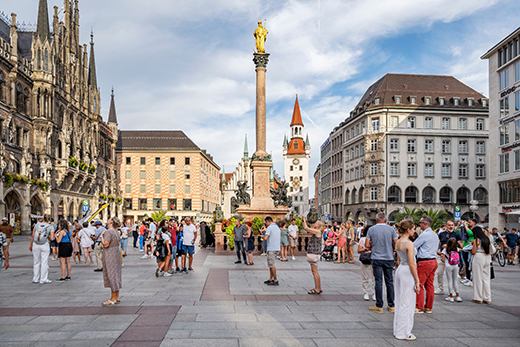
(Marienplatz in front of the New Town Hall in Munich, GNTB/Dagmar Schwelle)
Munich entwines heritage and modernity with effortless grace. This also bleeds into the city’s luxury stays. The Bayerischer Hof merges tradition and contemporary comfort, home to the two-Michelin-starred Atelier, a seasonal rooftop pool, and a four-level spa retreat. The NYX Hotel Munich in Obersendling channels the city’s creative rhythm with bold interiors, street art façades, DJ nights, and design-forward rooms. The Hotel Adlon Kempinski stands as a European icon of timeless luxury, offering refined suites, three restaurants, and the expansive Adlon Spa by Resense.
The pinnacle of luxury fashion lines the Maximilianstrasse, while Theatinerstrasse and Residenzstrasse cater to connoisseurs with elegant galleries and ateliers. The Art Nouveau charm of Müller’sche Volksbad and the Therme Erding, the world’s largest spa, are a study in affluent wellness. This city’s culinary splendour is reflected in the three-Michelin-star brilliance of Tohru in der Schreiberei and JAN, which offset the lively Viktualienmarkt, with its Bavarian flavours and beer garden. Sightseeing in Munich ranges from the Altstadt’s winding lanes and the lively Marienplatz to the grandeur of the National Theater and the masterworks housed within the Alte Pinakothek. Eco-friendly rickshaw tours offer a leisurely way to explore Munich’s highlights, gliding past historic squares, riverside gardens, and café-lined boulevards, revealing the city’s rhythm at a gentler pace.
Berlin
Berlin, owing to its intimacy with reinvention and ever-present duality, provides a stay dripping with culture and elegance. The NHOW Hotel Berlin, situated on the Spree in Friedrichshain, stands out for its cantilever architecture and a riverside spa. In City West, the Waldorf Astoria Berlin offers Germany’s only Guerlain Spa, refined treatments, and indulgent modern luxury, all dressed in Art Deco style.
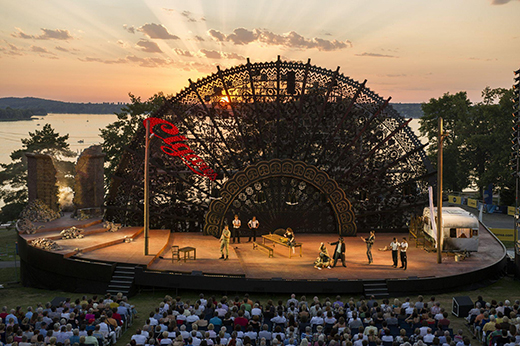
(Lookphotos/Travel Collection)
Luxury shopping and exclusive restaurants reside in historic buildings on the Kurfürstendamm, while the Kaufhaus des Westens, Europe’s second-largest department store, exhibits luxury goods, designer fashion, and a gourmet food hall. Wellness, too, mirrors the city’s multifaceted spirit, from the tropical serenity of Vabali’s Balinese saunas to Liquidrom’s futuristic saltwater immersion. At the same time, Gärten der Welt and the Tiergarten offer green sanctuaries for reflection. The city’s dining scene is enriched by innovative gastronomy, such as Rutz with its modern Nordic flair, Tim Raue with its blend of Asian intensity with German precision, and Katz Orange and Heimlich Treu, steeped in warmth and affinity.
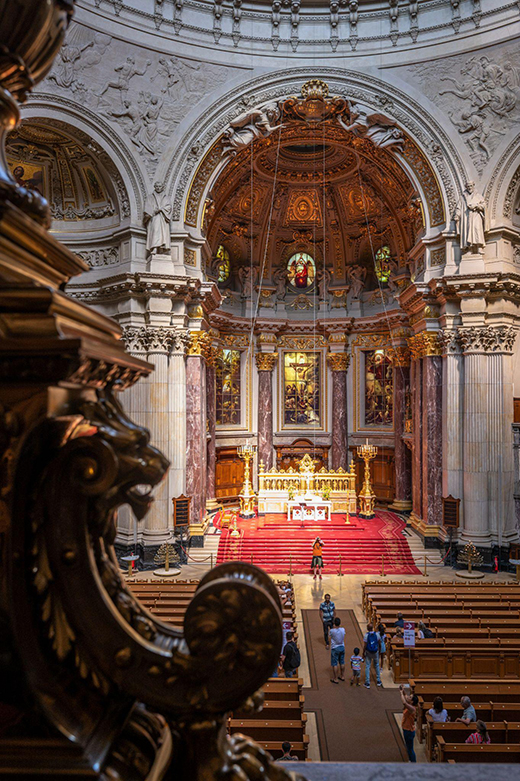
(DZT/Gregor Lengler)
History flows from the Brandenburg Gate, the Reichstag, Checkpoint Charlie, and the East Side Gallery, all of which are accentuated during the annual Festival of Lights. Meanwhile, the Museumsinsel and the Einstein Kultur centre promote art and culture.
Baden-Baden
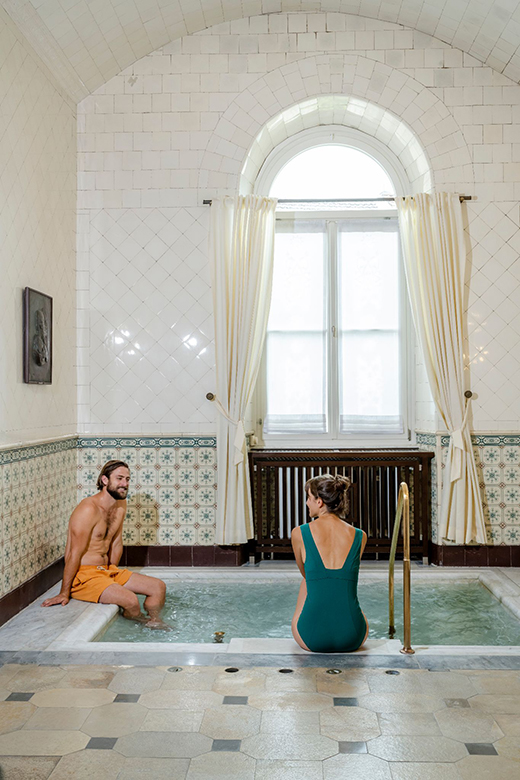
(DZT/Günter Standl)
On the edge of the Black Forest, Baden-Baden exudes revitalising splendour. For luxury stays, Brenners Park-Hotel & Spa is a 19th-century grand hotel overlooking the Lichtentaler Allee, featuring a celebrated spa and medical wellness centre. Just steps away, Maison Messmer combines old-world charm with boutique elegance, offering tranquil interiors and curated dining. Meanwhile, the Steigenberger Icon Europäischer Hof, newly revitalised, continues Baden-Baden’s tradition of grandeur with contemporary flair, featuring a rooftop terrace with sweeping views and the expansive Vault Spa at its heart.
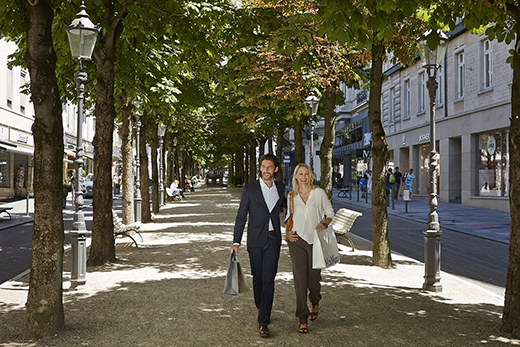
(DZT/Francesco Carovillano)
Baden-Baden’s Sophienstraße anchors the city’s luxury shopping scene, where Belle Époque storefronts house designer boutiques and artisan ateliers, while the Kurhaus Colonnades extends finely handcrafted elegance with bespoke goods. Wellness is cared for by the Caracalla Spa, with modern thermal pools, saunas, and steam baths, as well as by the historic Friedrichsbad, where Roman-Irish bathing rituals and classic architecture create a uniquely restorative experience. Baden-Baden’s dining scene balances elegance with tradition, from Le Jardin de France, the city’s Michelin-starred homage to French gastronomy, to Löwenbräu Baden-Baden and its cosy Keller, where Bavarian comfort food meets convivial warmth. Cultural immersion is secured by the elegant Casino Baden-Baden, the world-class performances at the Festspielhaus, the frescoed charm of the Trinkhalle, and the scenic Lichtentaler Allee.
Frankfurt
Frankfurt carries an understated sophistication where glass towers meet river promenades, and old-world charm quietly mingles with cosmopolitan rhythms. Refined accommodation is accorded by Meliá Frankfurt City, part of Meliá Hotels & Resorts Deutschland, rising in the striking One Forty West tower and blending Spanish hospitality with sleek modern design. Its panoramic sky bar, wellness suite, and artful interiors set the tone for urban indulgence. Nearby, the Steigenberger Icon Frankfurter Hof, a landmark since 1876, anchors the city’s heritage of grand hospitality with classical architecture, refined suites, and a renowned spa. Roomers Frankfurt, on the other hand, attracts with its sultry, design-forward atmosphere, acclaimed restaurant, and award-winning bar scene.
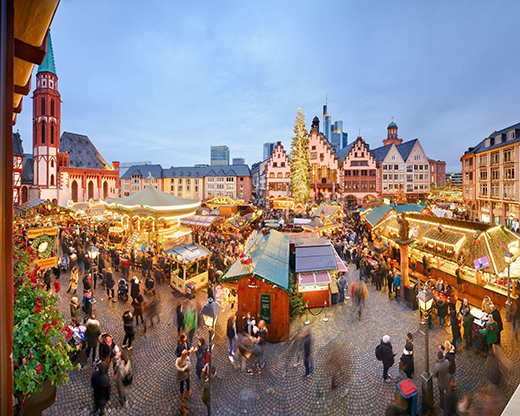
(GNTB/Francesco Carovillano)
High-end shopping is concentrated on Goethestraße, home to flagship boutiques from Chanel to Hermès. Wellness is primarily delivered through upscale hotel spas and riverside promenades along the Main, with several properties offering dedicated spa and fitness facilities. Frankfurt’s dining sits comfortably between refined and adventurous, with Michelin-starred tables such as Lafleur and Villa Merton set alongside creative neighbourhood restaurants and markets. Sightseeing balances the mediaeval and the modern: the historic Römerberg and the Altstadt meet the cultural sweep of the Museumsufer and institutions such as the Städel Museum, giving the city a tidy mix of heritage and contemporary art.
Experiencing Luxury in Germany
Beyond the urban sophistication lie curated luxury boutiques, designer arcades, and Europe’s largest outlet destinations, where craftsmanship, exclusivity, and sensory delight define every purchase. Equally compelling is the pull of Germany’s natural grandeur: alpine journeys aboard the Zugspitze and panoramic cable cars offer a striking contrast to city life, blending precision engineering with breathtaking vistas. Together, these experiences extend the narrative of Germany’s refinement.
Revelling in the German Expertise of Immersive Refined Retail: Across Germany, luxury shopping is less about indulgence and more about the convergence of heritage, curation, and hospitality. Value retail here transcends the conventional outlet experience to become an intimate journey through open-air promenades, architectural charm, and bespoke service.
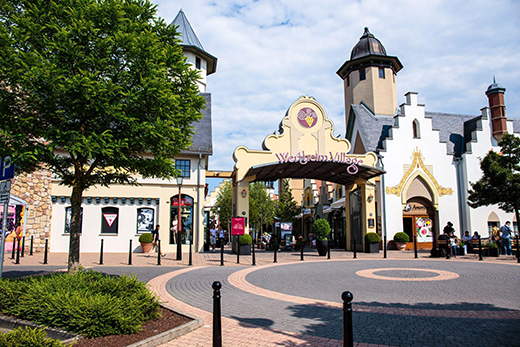
(Credits: Yingko, iStockimages)
Wertheim Village, located near Frankfurt, exemplifies this philosophy. Part of The Bicester Collection, it brings together over 110 boutiques, from Bally and Tod’s to Montblanc and Boss, all housed within pastel-toned façades that echo a romantic European village. Beyond shopping, Wertheim offers a lifestyle of opulence with champagne bars and gourmet cafés. In Berlin, The Apartment reimagines luxury shopping as an immersive, lifestyle-driven experience, blending fashion, art, homeware, and design in a gallery-like, appointment-only space where nearly everything is for purchase and visitors are encouraged to explore, touch, and linger. The Designer Outlet Berlin, located just outside the capital, also mirrors the city’s eclectic energy, combining global fashion houses with concept stores and local labels.
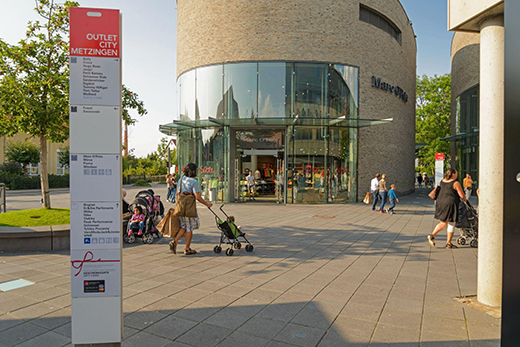
(Credits: delectus, iStockphotos)
Further south, Outletcity Metzingen, Europe’s largest luxury outlet, reinvents the idea of shopping at scale. What began as the home of Hugo Boss has evolved into a retail city of more than 150 brands, including Gucci, Balenciaga, and Burberry, connected by sleek modern architecture and landscaped avenues. Complemented by fine-dining concepts like FRITZ and Alte Kassette, art installations and open-air lounges, it alludes to a distinctly cosmopolitan rhythm. With concierge services, private lounges, and tax-free shopping support, it bridges the precision of German efficiency with the seduction of European luxury.
In Bavaria, Ingolstadt Village continues the thread of immersive retail storytelling. Set amid manicured boulevards and inspired by classic Bavarian design, it blends international names such as Prada, Versace, and Etro with fine dining and art installations that echo Munich’s creative soul. McArthurGlen Designer Outlet Neumünster, near Hamburg, balances Northern charm with luxury design amidst cobblestone paths and Nordic façades.
Scaling the Zugspitze: Zugspitze, Germany’s highest peak, promises not just altitude but an elevated state of experience. The journey to its summit is a seamless fusion of history, design, and natural wonder. Travellers begin in Garmisch-Partenkirchen, an alpine resort town just 90 kilometres from Munich.
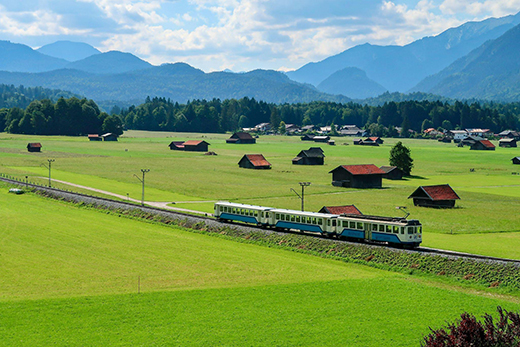
(The cogwheel train, GNTB/Jan Overgaard)
The ascent unfolds aboard the Zugspitze cogwheel train, one of Europe’s few remaining rack railways, and winds through forests, meadows, and quaint alpine hamlets, before entering the 4.5-kilometre Zugspitze Tunnel, an engineering feat that burrows deep through the rock to reach the Zugspitzplatt Glacier Plateau. The slow rhythm of the train, the soft mechanical hum and the shifting mountain light promote surrender to a more deliberate pace, a reminder that luxury can lie in stillness.
From the glacier, the journey continues aboard the Cable Car Zugspitze, a masterpiece of contemporary engineering. The panoramic sweep of the Alps—spanning Germany, Austria, Switzerland, and Italy—is a visual symphony that redefines perspective. In winter, the slopes glitter with skiers; in summer, they open to hikers and dreamers.
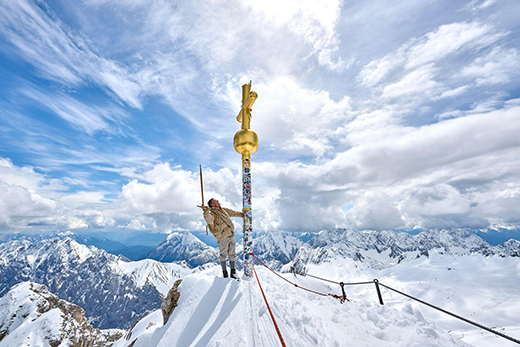
(The golden summit cross, DZT/Florian Trykowski)
At the summit, the experience crescendos. The Panorama 2962 restaurant offers elevated dining in every sense, serving refined Bavarian dishes such as venison, käsespätzle, and warm apple strudel, paired with regional wines. Its floor-to-ceiling windows frame the peaks like a living mural. At the same time, the Gipfelalm next door offers a more rustic, fireside counterpart. Whether descending by the same route or combining the cogwheel train with the Eibsee cable car, the circular journey feels complete, offering a fluid blend of nostalgia and innovation.
Germany presents a layered front of craft and culture. Its cities and landscapes connect through a shared appreciation for detail, precision, and purpose. Along winding streets and quiet plazas, through alpine heights and thermal waters, there is a sense of discovery in every moment. A handcrafted detail noticed in a boutique, a fleeting view from a mountain cable car, or the subtle rhythm of daily life in a centuries-old square, all leave a lasting understanding of refinement as a way of living.
Cover Image Credit: GNTB/Francesco Carovillano